Props MVP Redesign
Props MVP Redesign
Redesigning Props’ mobile app to reduce drop-off for first-time users and increase Day 1-7 retention


Industry
Consumer Social
Consumer Social
Skills
UX Research
UX Research
iOS App Design
iOS App Design
Rapid Testing (RITE)
Product Strategy
Product Strategy
Team
Logan Cundiff (Co-Founder, Engineer)
Edward Mensah (Co-Founder, Engineer)
Carolyn Tung (UX Manager & Consultant)
Allison Chu (UX Designer)
Sean Pak (User Testing)
Timeline
Aug - Oct 2025
Aug - Oct 2025
Industry
Consumer Social
Team
Logan Cundiff (Co-Founder, Engineer)
Edward Mensah (Co-Founder, Engineer)
Carolyn Tung (UX Manager & Consultant)
Allison Chu (UX Designer)
Sean Pak (User Testing)
Timeline
Aug - Oct 2025
Skills
UX Research
iOS App Design
Rapid Testing (RITE)
Product Strategy
MY ROLE
Context
Context
Props is a gamified community-building and reward platform for social groups, charities, and businesses. It aims to incentivize users to join communities and win “props” by participating in their events.
Over 12 weeks, we partnered with Props to reduce first-session drop-off and increase Day 1-7 retention for Props’ gamified event platform. We focused on (a) clarity of the core reward loop, (b) navigation and information architecture, and (c) early momentum drivers.
Props is a gamified community-building and reward platform for social groups, charities, and businesses. It aims to incentivize users to join communities and win “props” by participating in their events.
Over 12 weeks, we partnered with Props to reduce first-session drop-off and increase Day 1-7 retention for Props’ gamified event platform. We focused on (a) clarity of the core reward loop, (b) navigation and information architecture, and (c) early momentum drivers.

IMPACT
Outcomes (Shipped 2026)
We transformed Props’ confusing MVP into a clear, learnable experience that helps users understand what to do, where to go, and why it matters.
What we achieved:
Identified core retention blockers through user testing and research
Redesigned key flows (onboarding, home, quests, rewards) for clarity and predictability
Reduced cognitive load so users reach value faster and with less confusion
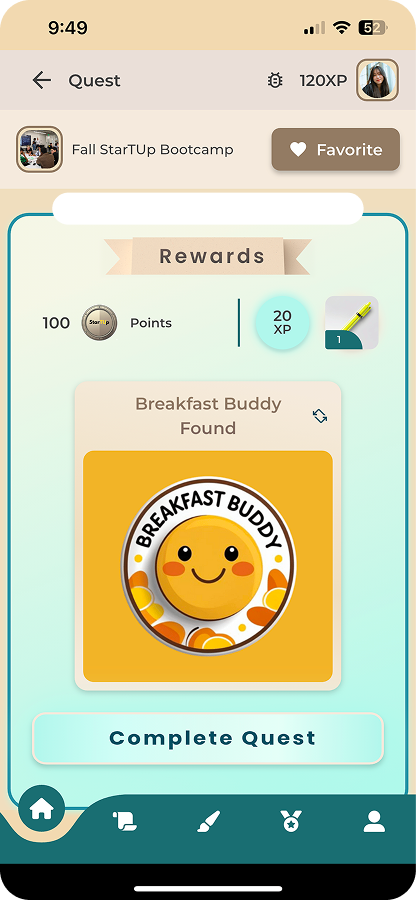
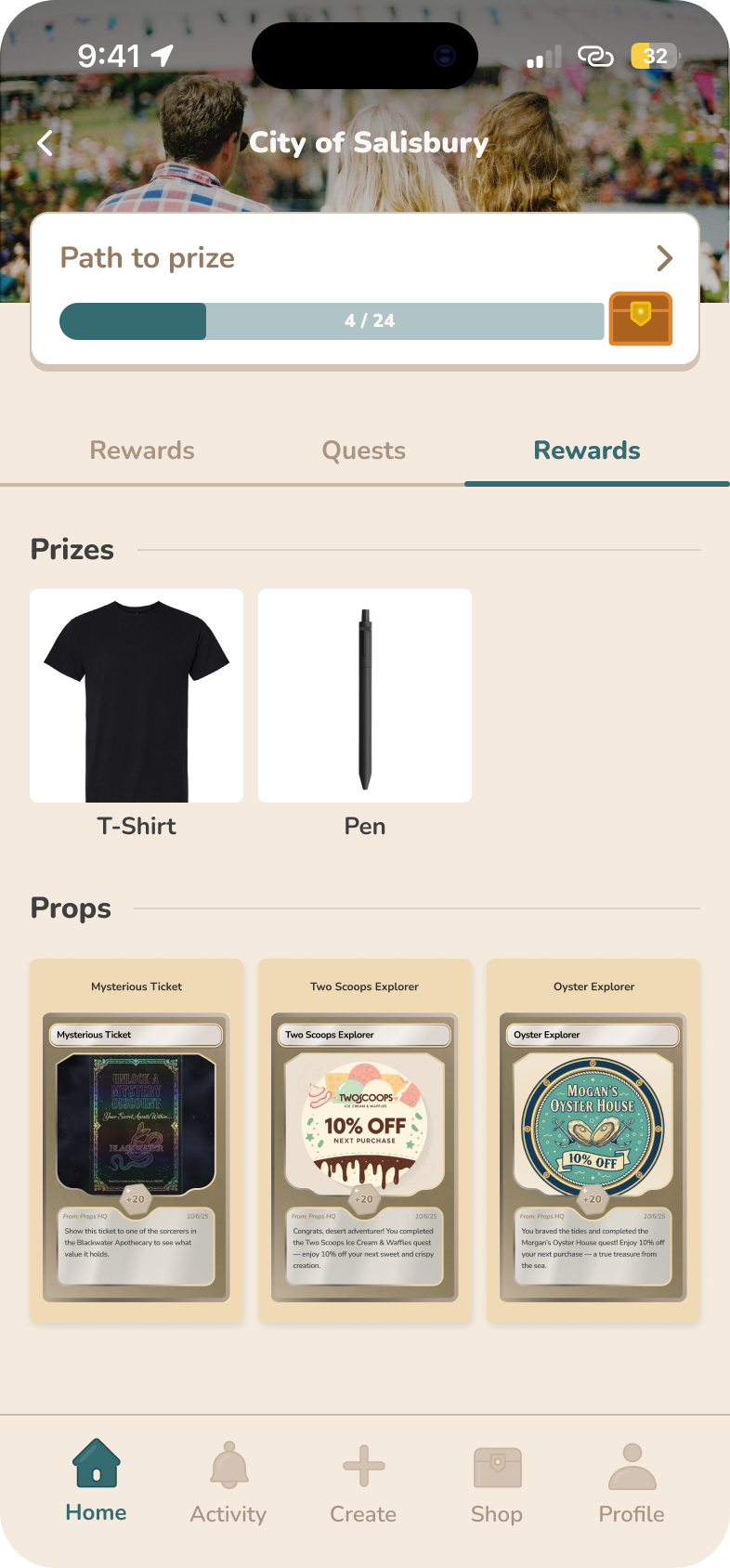
Strengthened the quest → reward loop to support user retention and monetization
Set up the product for scaling into Props Premium and event partnerships
We transformed Props’ confusing MVP into a clear, learnable experience that helps users understand what to do, where to go, and why it matters.
What we achieved:
Identified core retention blockers through user testing and research
Redesigned key flows (onboarding, home, quests, rewards) for clarity and predictability
Reduced cognitive load so users reach value faster and with less confusion
Strengthened the quest → reward loop to support user retention and monetization
Set up the product for scaling into Props Premium and event partnerships


PROBLEM
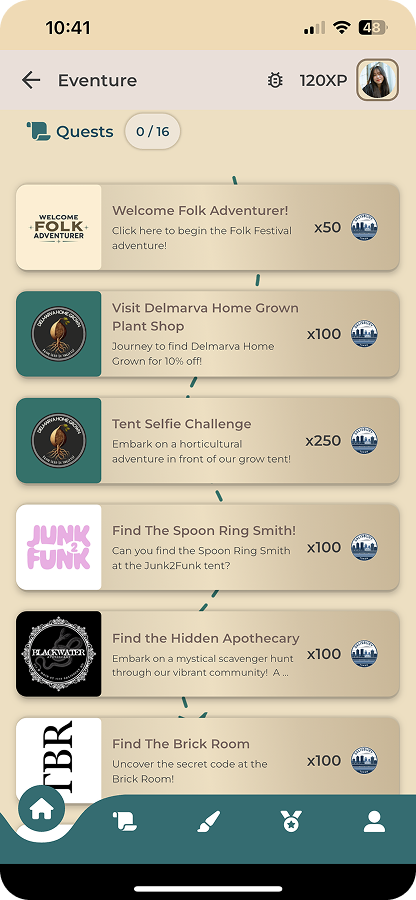
Testing showed users liked the idea behind Props, but the experience felt overwhelming and unintuitive.
50%
of users would use Props frequently
but
but
75%
of users thought the system was inconsistent and hard to use
"If my friends sent me this link, I wouldn't be able to figure it out. I would've just said forget it, you can join without me."
"There's too much information."
"I have to go through every nav bar page to figure out what to do.”


OUR APPROACH
Identifying product-market fit through user research
Since Props was early-stage, we conducted user research to identify how Props could boost community engagement in a way that met user needs and addressed the right users.
16 discovery interviews
4 usability tests
System Usability Scale (SUS) Survey
6 personas


INSIGHTS
The platform’s reward loop was buried under unclear navigation + visual hierarchy. We aimed to fix that.
✶
First-time users abandoned key tasks mid-flow
✶
Users cycled through every tab trying to guess where to complete tasks
✶
Users don’t understand what key features in Props are
✶
Organizers completed key tasks only through trial and error
STRATEGY
Creating a seamless experience for first-time users and strengthening the reward loop
User testing made it clear that new users needed a smoother path to their first win. Our strategy focused on reducing early friction and making the quest → reward loop unmistakable, so users immediately understood the value of Props. The redesign aimed to boost user retention to make Props' business model sustainable after launch.
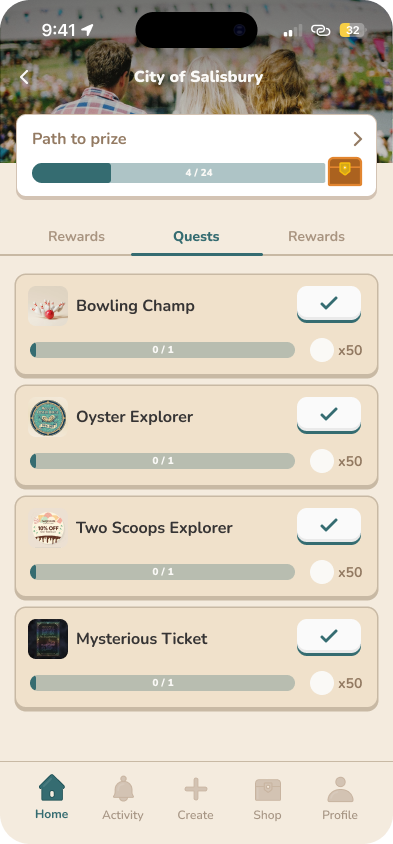
HMW make a new user understand Props and complete a first meaningful action in < 5 min?
HMW surface the right groups/quests above the fold so first-time users always see something compelling to do?
HMW reinforce the reward loop to boost user retention?
HMW give organizers clear, low-effort creation with immediate confirmation and guaranteed visibility?
FINAL DESIGN
Impact
Impact
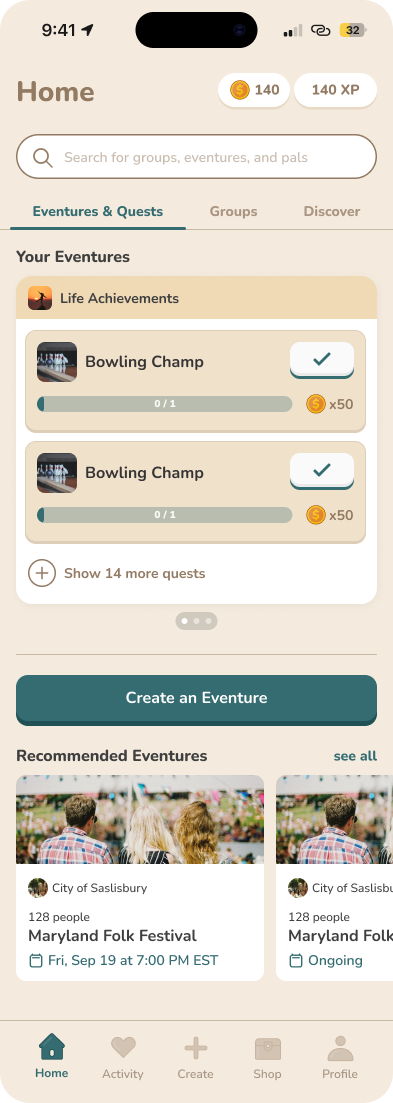
Select tabs to cycle through how we improved 6 key user flows
Home (2)
Quests (3)
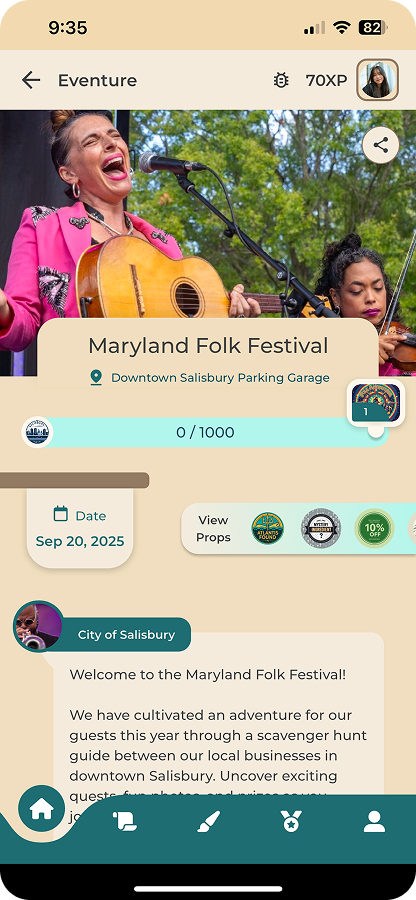
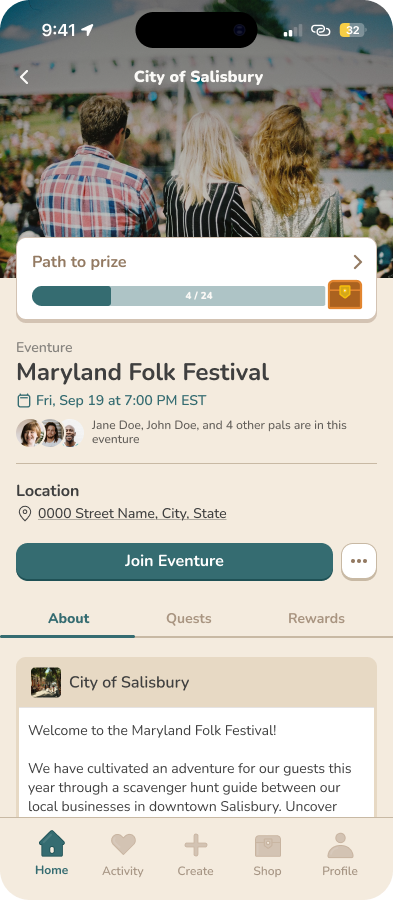
Eventures (1)
1
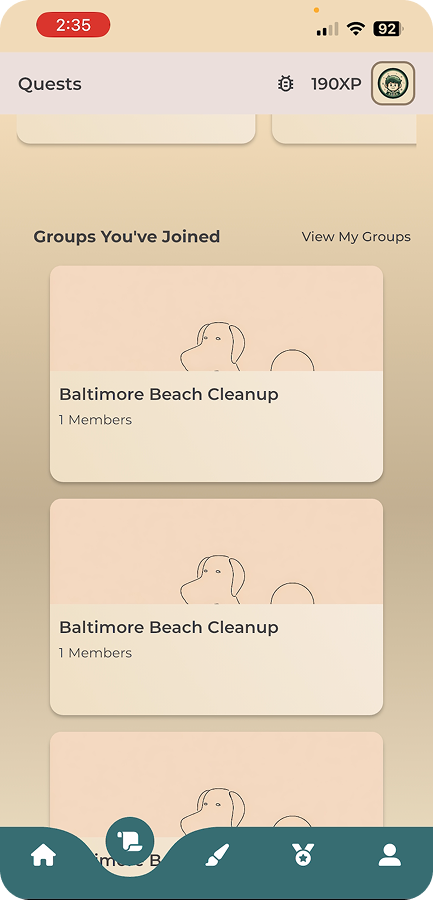
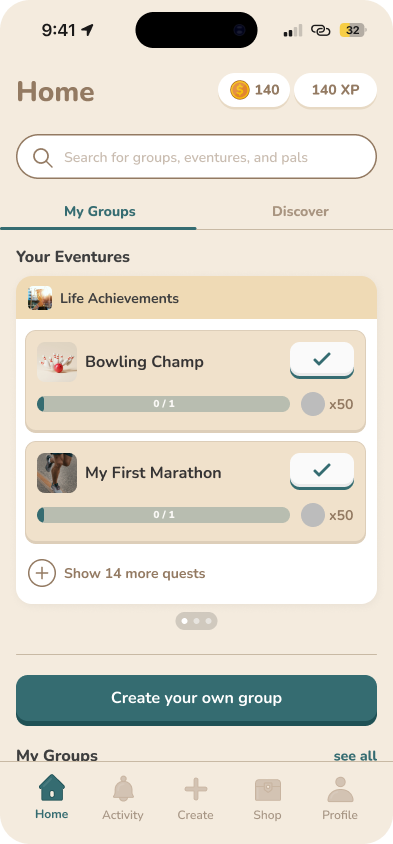
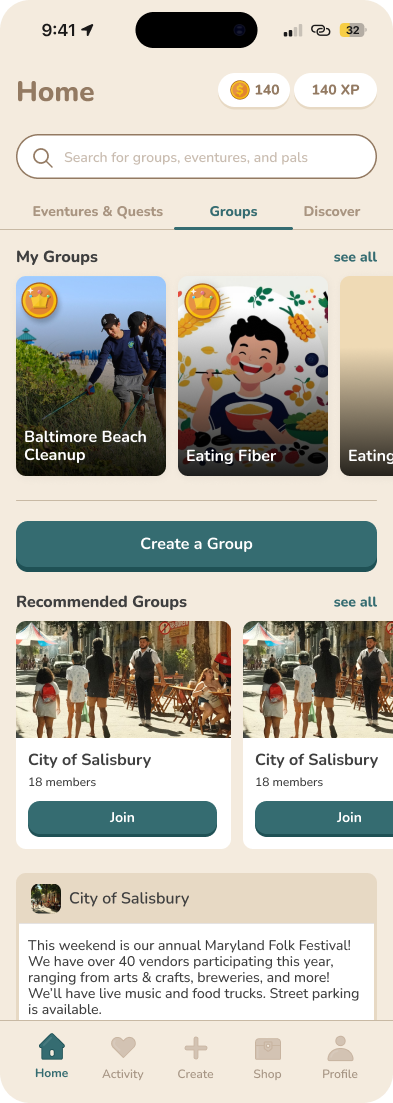
Home (My Groups)
Problem
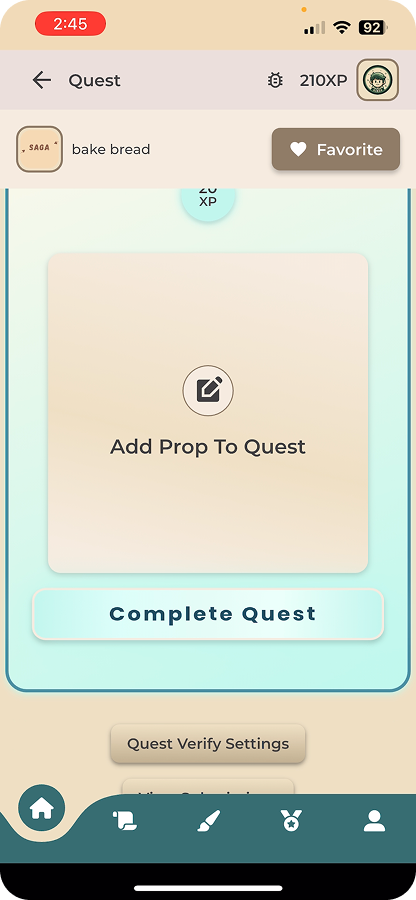
Users expected the Home screen to function as a hub for “their groups,” but the UI made it hard to distinguish between groups they joined vs. groups they manage. Essential actions, like checking active quests or navigating into recently created group, were buried below the fold.
"There's too much going on."
"Where's the club I created?"
Impact
By restructuring the Home (My Groups) section with clear labels, predictable grouping, and reduced scroll depth, we gave users a reliable entry point into their community activity.
✶
Reduced confusion between “Groups I Joined” and “Groups I Manage” through clear section headers
✶
Decreased time-to-action by surfacing recently created and active groups at the top
✶
Improved user confidence with predictable navigation and stable hierarchy
✶
Lowered cognitive load for older and non-technical users

2
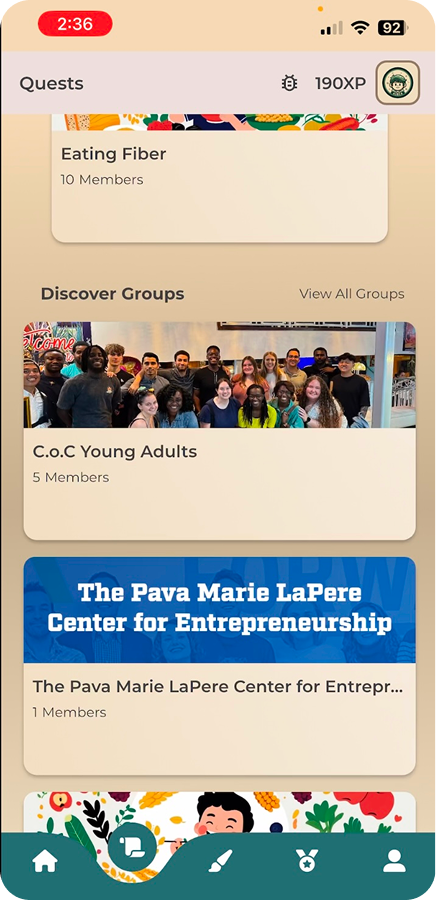
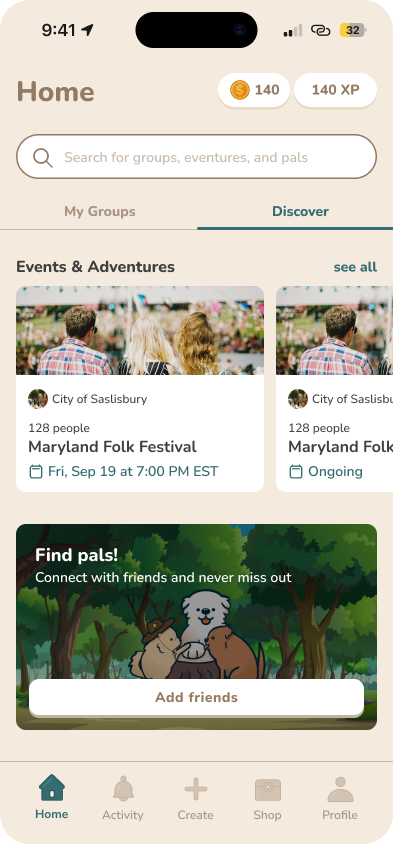
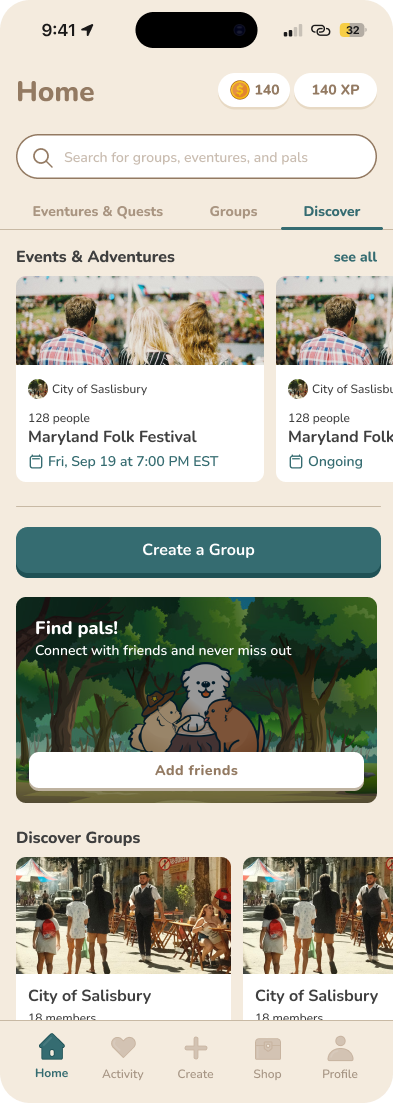
Home (Discover)
Problem
The Discover view mixed plan details, community content, and props into a disorganized feed. Users struggled to find groups to join, often assuming props were clubs or thinking the platform lacked meaningful content altogether.
"Where do I actually join something?"
"I don't know how to start."
Impact
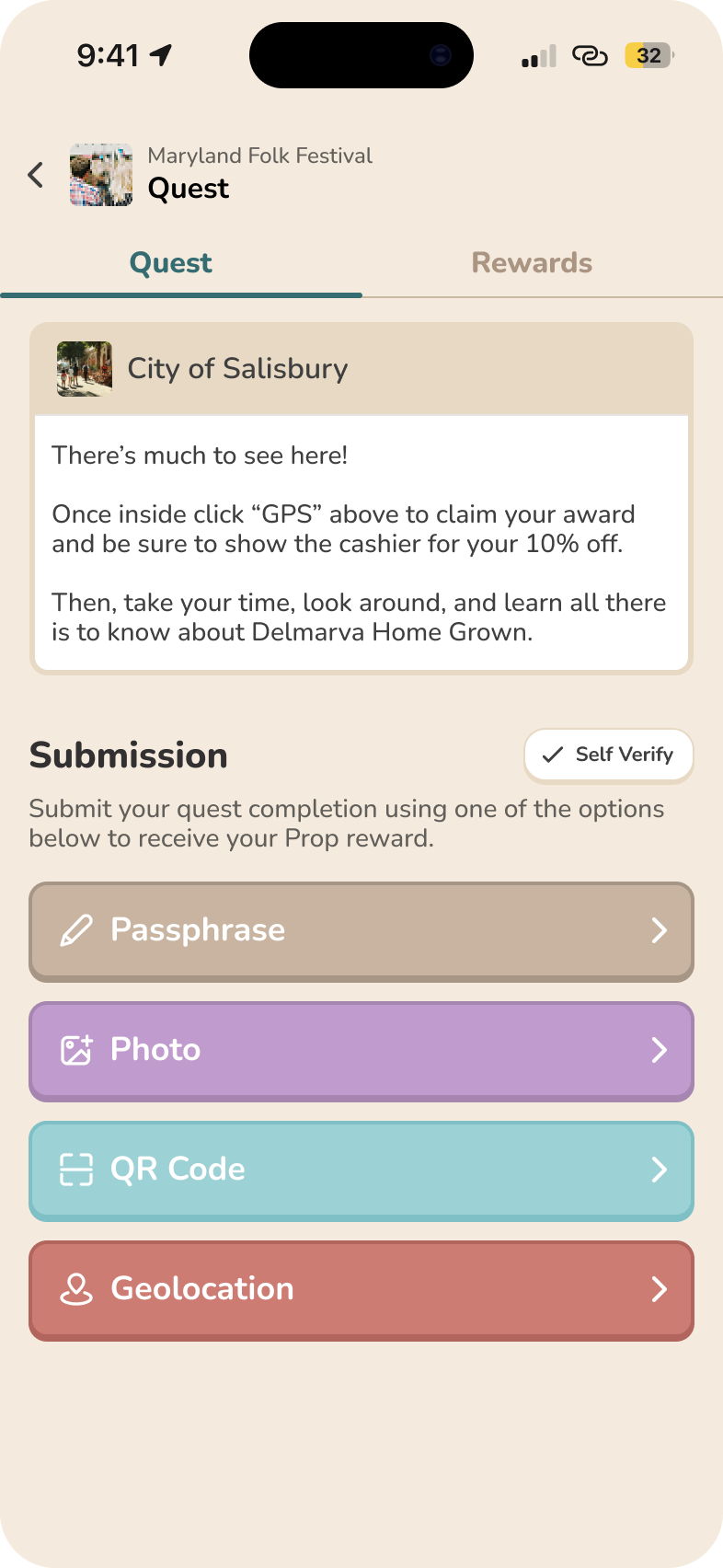
We reorganized Discover into a structured, scannable system that surfaces high-value groups and quests early, helping users discover a first action quickly.
✶
Separated "My Groups" from "Discovery" to surface discoverable groups earlier
✶
Improved scrolling hierarchy to prevent users from missing joinable groups
✶
Introduced category-based searching to reduce scroll fatigue

Home (2)
Quests (3)
Eventures (1)
1
Home (My Groups)
Problem
Users expected the Home screen to function as a hub for “their groups,” but the UI made it hard to distinguish between groups they joined vs. groups they manage. Essential actions, like checking active quests or navigating into recently created group, were buried below the fold.
"There's too much going on."
"Where's the club I created?"
Impact
By restructuring the Home (My Groups) section with clear labels, predictable grouping, and reduced scroll depth, we gave users a reliable entry point into their community activity.
✶
Reduced confusion between “Groups I Joined” and “Groups I Manage” through clear section headers
✶
Decreased time-to-action by surfacing recently created and active groups at the top
✶
Improved user confidence with predictable navigation and stable hierarchy
✶
Lowered cognitive load for older and non-technical users

2
Home (Discover)
Problem
The Discover view mixed plan details, community content, and props into a disorganized feed. Users struggled to find groups to join, often assuming props were clubs or thinking the platform lacked meaningful content altogether.
"Where do I actually join something?"
"I don't know how to start."
Impact
We reorganized Discover into a structured, scannable system that surfaces high-value groups and quests early, helping users discover a first action quickly.
✶
Separated "My Groups" from "Discovery" to surface discoverable groups earlier
✶
Improved scrolling hierarchy to prevent users from missing joinable groups
✶
Introduced category-based searching to reduce scroll fatigue

Home (2)
Quests (3)
Eventures (1)
1
Home (My Groups)
Problem
Users expected the Home screen to function as a hub for “their groups,” but the UI made it hard to distinguish between groups they joined vs. groups they manage. Essential actions, like checking active quests or navigating into recently created group, were buried below the fold.
"There's too much going on."
"Where's the club I created?"
Impact
By restructuring the Home (My Groups) section with clear labels, predictable grouping, and reduced scroll depth, we gave users a reliable entry point into their community activity.
✶
Reduced confusion between “Groups I Joined” and “Groups I Manage” through clear section headers
✶
Decreased time-to-action by surfacing recently created and active groups at the top
✶
Improved user confidence with predictable navigation and stable hierarchy
✶
Lowered cognitive load for older and non-technical users

2
Home (Discover)
Problem
The Discover view mixed plan details, community content, and props into a disorganized feed. Users struggled to find groups to join, often assuming props were clubs or thinking the platform lacked meaningful content altogether.
"Where do I actually join something?"
"I don't know how to start."
Impact
We reorganized Discover into a structured, scannable system that surfaces high-value groups and quests early, helping users discover a first action quickly.
✶
Separated "My Groups" from "Discovery" to surface discoverable groups earlier
✶
Improved scrolling hierarchy to prevent users from missing joinable groups
✶
Introduced category-based searching to reduce scroll fatigue

Key Takeaways
This project strengthened my ability to lead through ambiguity, maintain structure, and mentor a junior designer through iterative cycles while preserving design integrity under shifting expectations.
Product Strategy
Reducing ambiguity is often more impactful than adding features. We focused on perfecting in-scope features to ensure the experience of first-time users and the reward loop would be seamless and valuable.
Design Leadership
Guiding an intern sharpened my project management skills and my ability to articulate rationale, critique work, and maintain high standards without micromanaging.
Stakeholder Alignment
When feedback conflicted with research or scope, I redirected conversations back to research insights, business anchors, and frameworks like user stories and Jobs to be Done.